

How To Inspect Element In Windows Application
There are numerous valuable web evolution resource, be it books, videos, online courses, and more. Learning how to employ a browser's Audit Element tool is one such powerful ability. It's an invaluable learning tool — one that's correct under your fingertips and e'er accessible.
With the Inspect Element feature, yous get to see the website's inner workings. Although you tin only run into frontend markup such as HTML, CSS, and sometimes JavaScript, it gives you a manner to meet precisely how the developers built a website.
In this postal service, we're going to testify you how to use the Inspect Chemical element tool and some of the related technologies, features, and functionality y'all'll come beyond. First, let'southward requite you a formal introduction to the Audit Element tool itself.
Cheque out our video guide on how to edit a website with inspect chemical element
Introducing the Inspect Element Tool
In the web'due south early days, at that place was just one way to await at a website's code — the View Source characteristic.
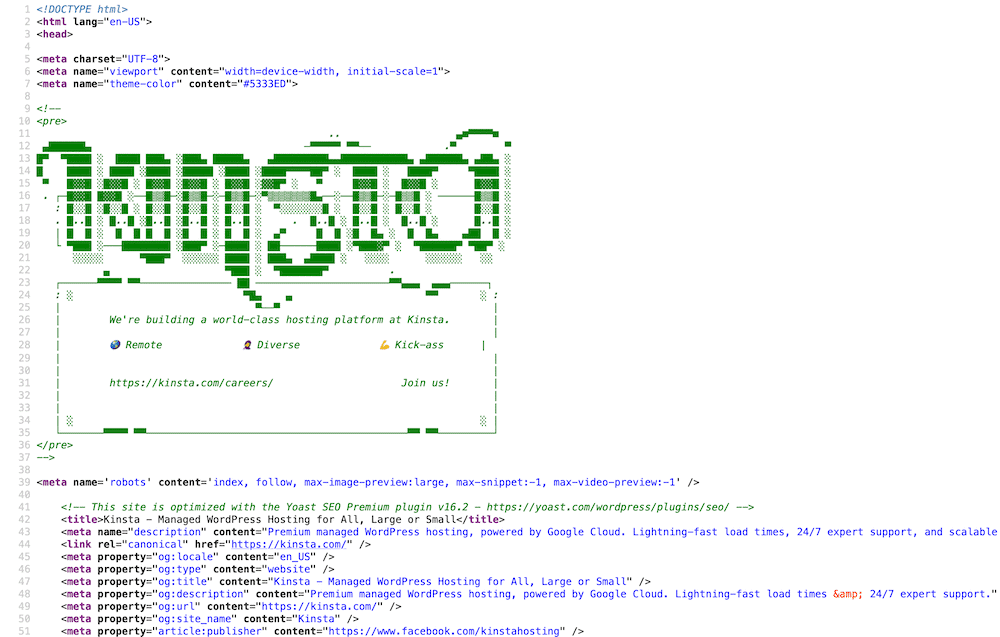
This situation was prevalent in the days earlier we had Cascading Mode Sheets (CSS) and JavaScript in abundance. Spider web developers used HTML for all site elements, including content, design, and… well, everything.
Once the spider web started to evolve, and the underlying technologies increased in power, it was necessary to develop better tools. Firefox's Firebug was an early on solution for finding out how a website performed and worked nether the hood:

After a while, that functionality found its fashion into nearly all browsers. Today, nosotros know that feature as the Inspect Element tool:
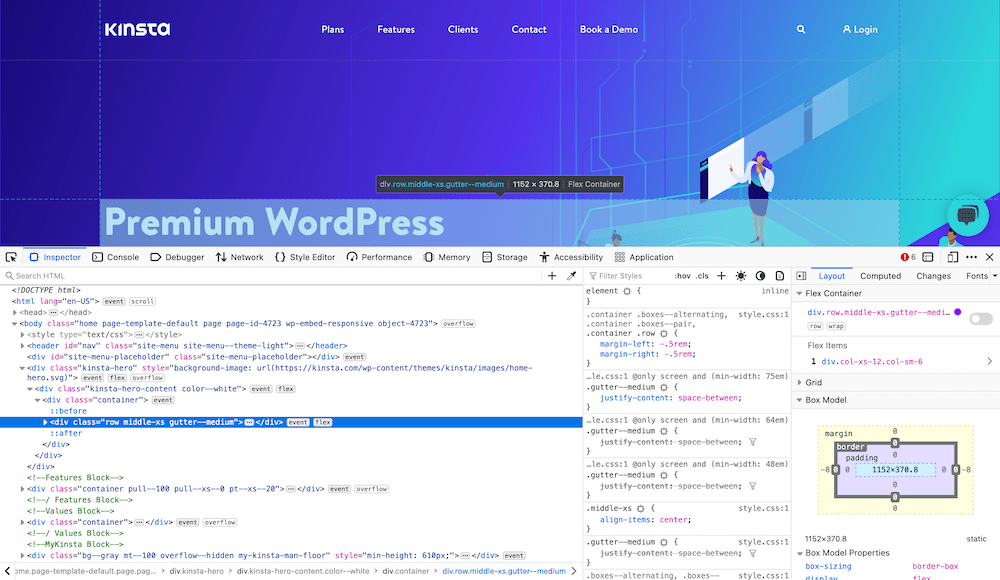
Information technology's a powerful way to see the underlying technology and code of a website. As such, you tin can notice it in a few dissimilar places — often through a toolbar card, right-clicking on a page and selecting the option, or with a keyboard shortcut.
While the Inspect Element tool'southward chief focus is on the HTML and CSS of a page, there's more you tin do with it.
Touring the Inspect Element Panel
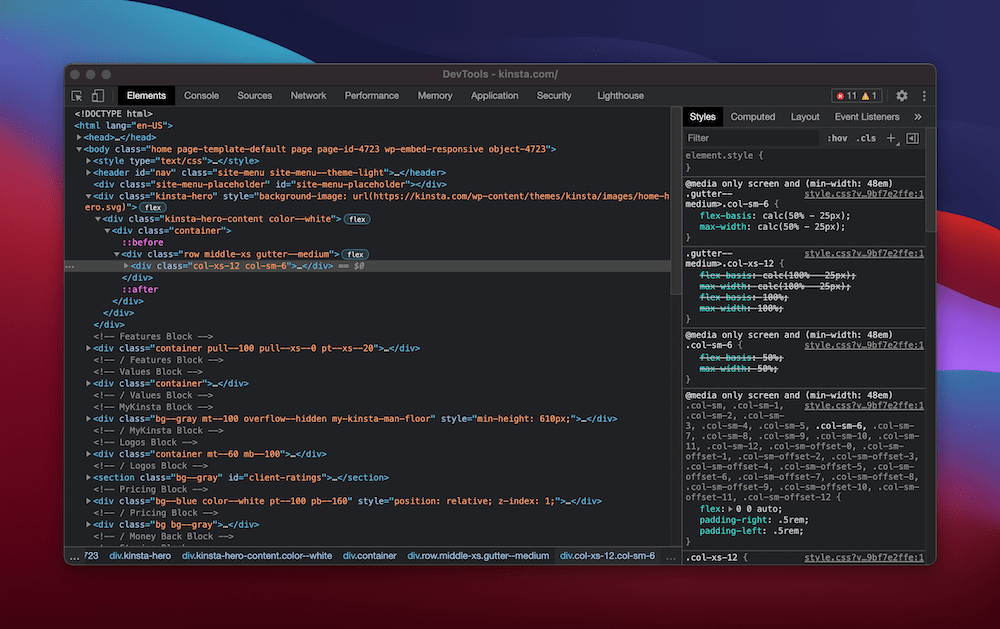
The Inspect Chemical element tool is much more than than a way to display code. There are frequently several panels to access:
- Inspector — This is called Elements in some browsers. It's the main screen in the Inspect Element tool and shows you lot the page code, along with element-specific CSS. You'll also find further details on a site'south "filigree organisation" and other aspects.
- Console — This is a frontend alarm log for a site, and it'south a place yous can also enter code snippets to perform a quick test of an idea.
- Network — Here, you'll encounter the requests made to and from a server, such as all Postal service and Get requests.
- Performance — Of course, a site has to be performant. As such, in that location's a dedicated tool to help you approximate some essential site metrics. Some browsers exercise ameliorate than others here.
- Retentiveness — This panel lets you see how a site uses retentiveness, and once again, some browsers offer all-encompassing metrics.
- Awarding — Within this panel, y'all tin can encounter a whole range of data on the site'due south cache, background services, and more.
On top of this, there are more panels you tin can add:
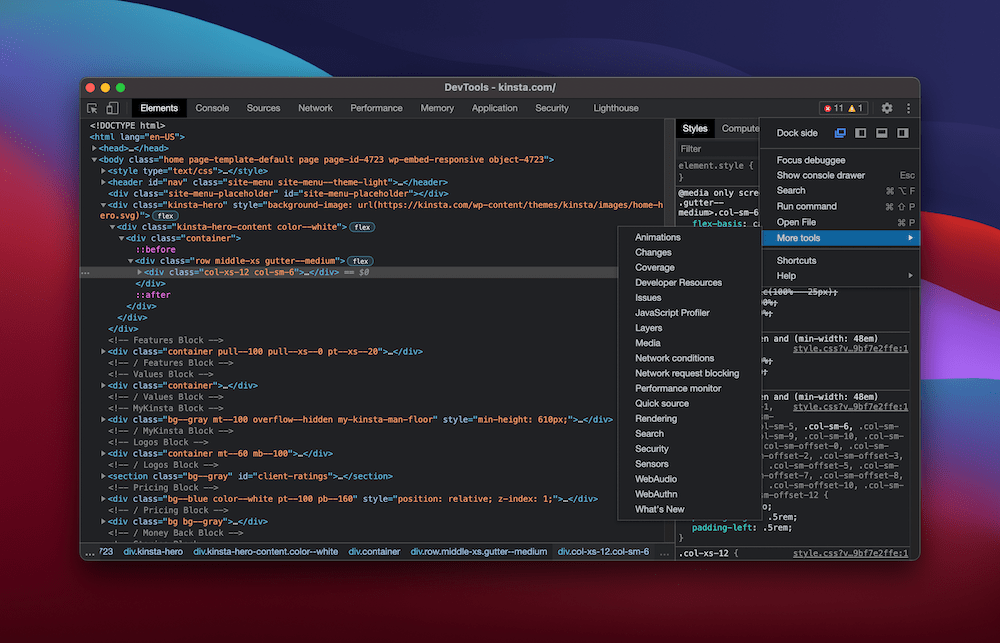
There are simple panels, such as Media, and more complex ones like the JavaScript Profiler and the Performance monitor. In a nutshell, the Inspect Chemical element tool'due south name is doing a disservice to all functionality under the hood. It has immense ability and should be primal to whatever web developer's workflow.
Why You'd Want to Employ Inspect Element
The Inspect Element tool is nearly the but "nailed-on" solution you'll need to have at your side during development. We'll get into the technical details as to why throughout the residuum of the article. First, though, it's worth talking almost your motivation for using Inspect Element.
There are a few reasons why you'd desire to employ the tool:
- You can browse other websites for inspiration on how to piece of work on yours.
- You'll learn how other sites or developers reach specific techniques.
- It gives you a license to experiment on your site without consequences.
- In most Inspect Chemical element tools, yous get the opportunity to debug the sites.
- It'south proficient to detect out more about the website in question.
In brusk, learning about web development involves looking at good examples of websites and finding out what makes them tick.
The Inspect Element tool lets you bank check out the exact HTML and CSS used on a site, giving you a great chance to implement those aspects and techniques in your work.
How to Find Your Browser's Audit Element Tool
The expert news is that finding the Inspect Element tool is straightforward. In most cases, you'll right-click on a folio and select Inspect or Inspect Element:
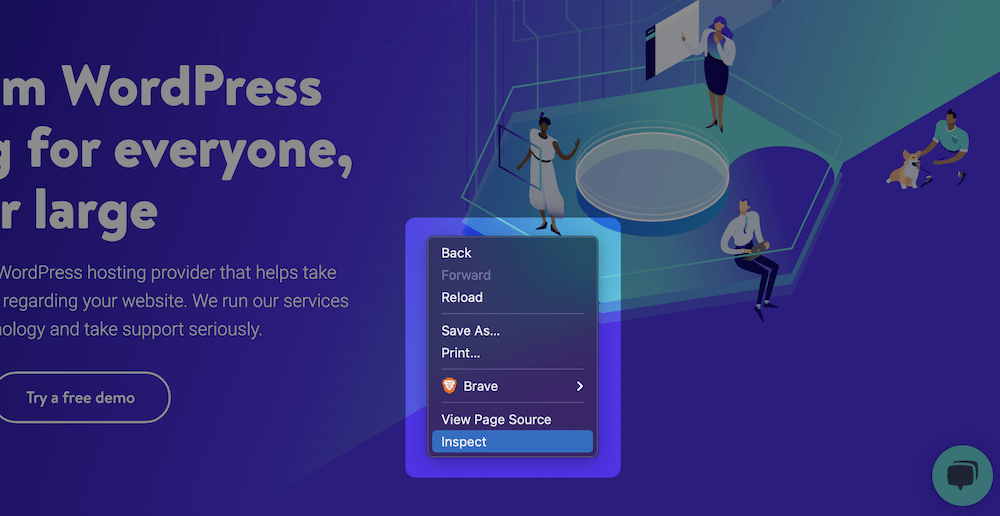
By default, information technology'll open the tool in a split window. It frequently defaults to the right-hand side. But y'all can customize this to your liking and fifty-fifty pop the tool out into its window:
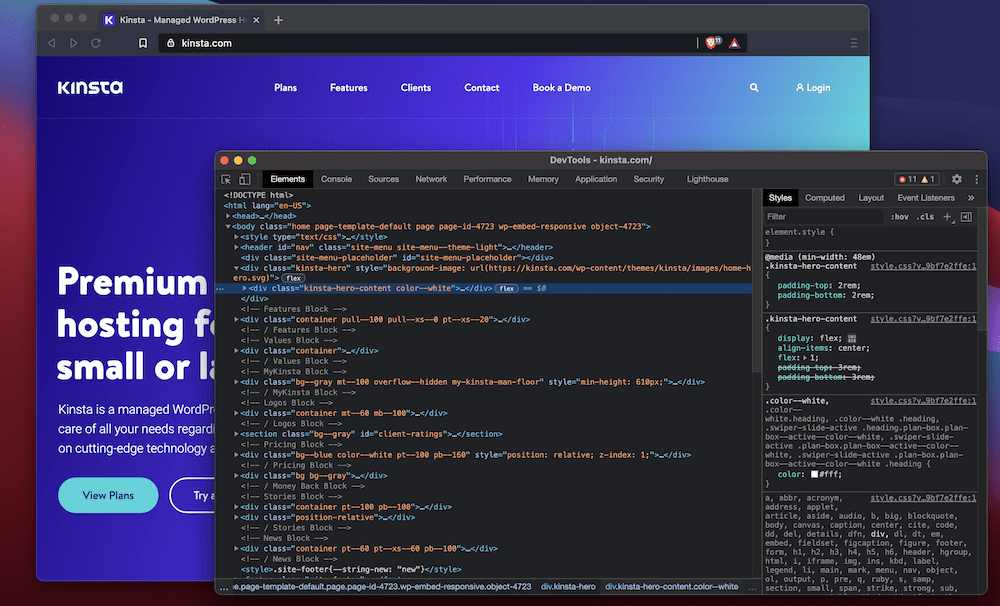
Of form, you can also admission Inspect Element from the browser toolbar or through a keyboard shortcut. The verbal location will vary depending on the browser. For instance, in Firefox, y'all'll find the Web Programmer Tools in the Tools > Browser Tools bill of fare. In contrast, Dauntless (and other Chromium-based browsers) take the Developer Tools option in the View > Programmer carte du jour:
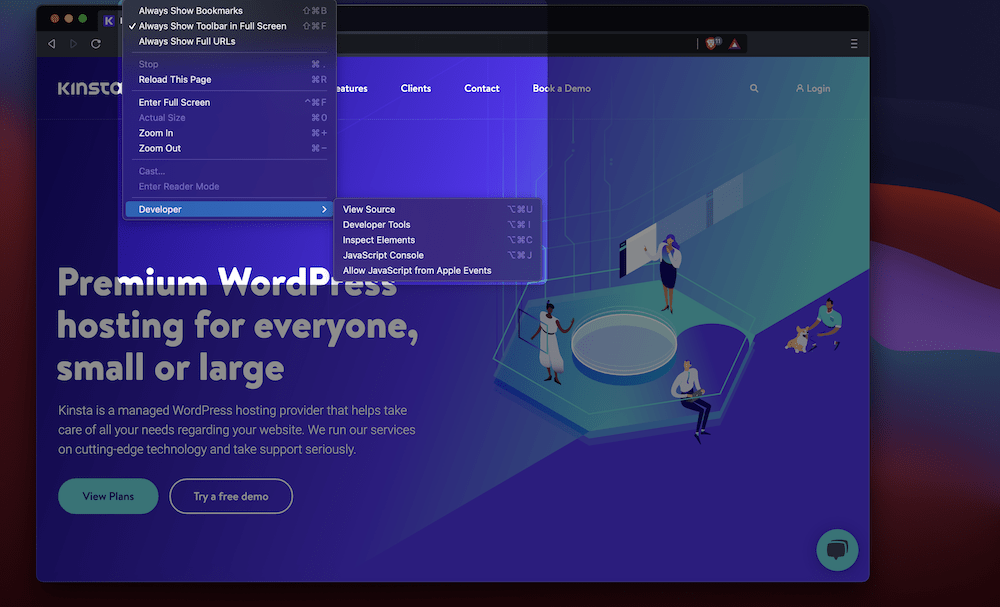
The keyboard shortcuts are often similar cross-browser: Command + Shift + C (Command + Shift + C for Windows). This shortcut makes it quick to bring up the tools you need to work with straight away.
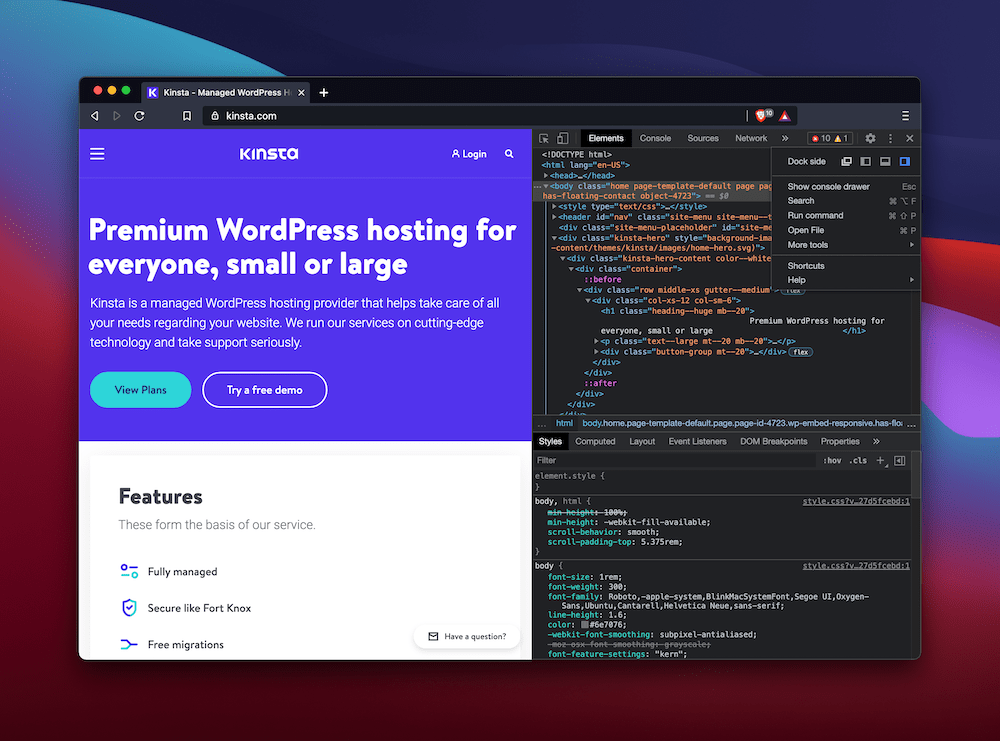
If you've never opened the Inspect Chemical element tool before, it's often displayed on the right-manus side of your menu, equally we mentioned earlier. To change this, click on the traffic light menu in the Inspect Chemical element's toolbar. Hither, y'all can switch the side the "dock" is displayed:
Note that Firefox also uses a "triple pane" view by default, which helps yous to get as much data in the Inspect Chemical element tool as possible:
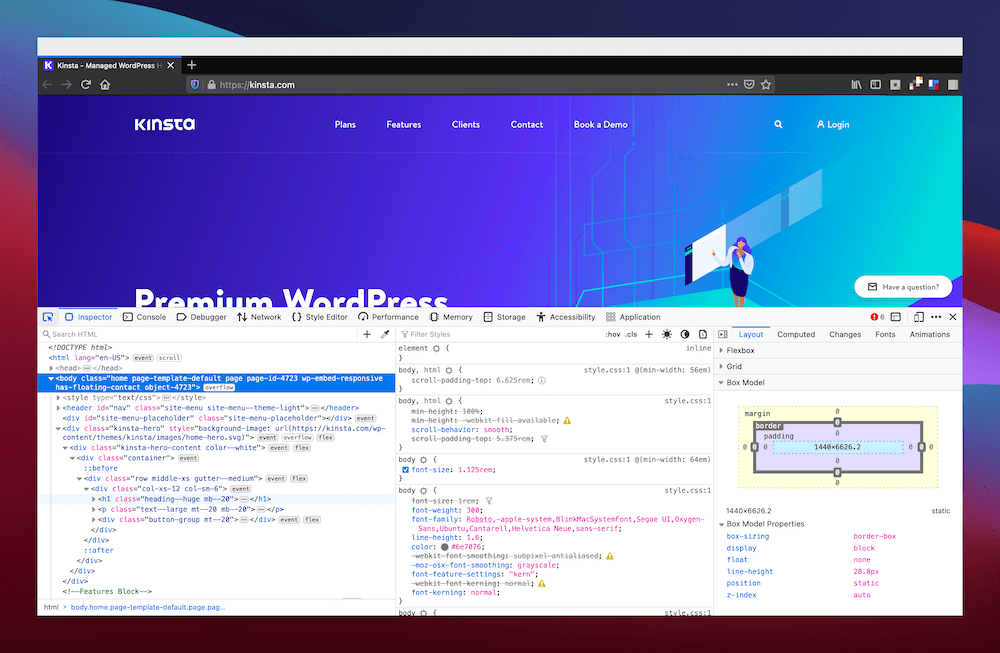
Now that yous have the tool open, it'due south a good idea to notice out what you can do with it. We'll talk about this side by side.
iii Situations for Using the Inspect Element Tool
Nosotros've touched on some means you lot'll utilize the Inspect Element tool, merely we can go further than this to offer some employ cases. Allow's discuss these in brief.
i. Searching for Specific Elements on a Webpage
The master goal of the Inspect Element tool is in its name — inspecting website elements. To practise this, you'll head to the desired webpage and so choose your method of opening the development tools.
Once the console is open up, you'll click the arrow that acts equally a selector for your desired element:
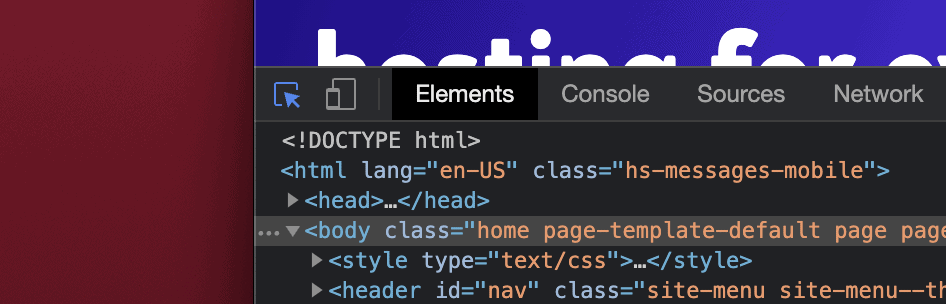
From here, yous tin can hover over any element on the page, and you lot'll see it highlighted in the Inspector/Elements window:
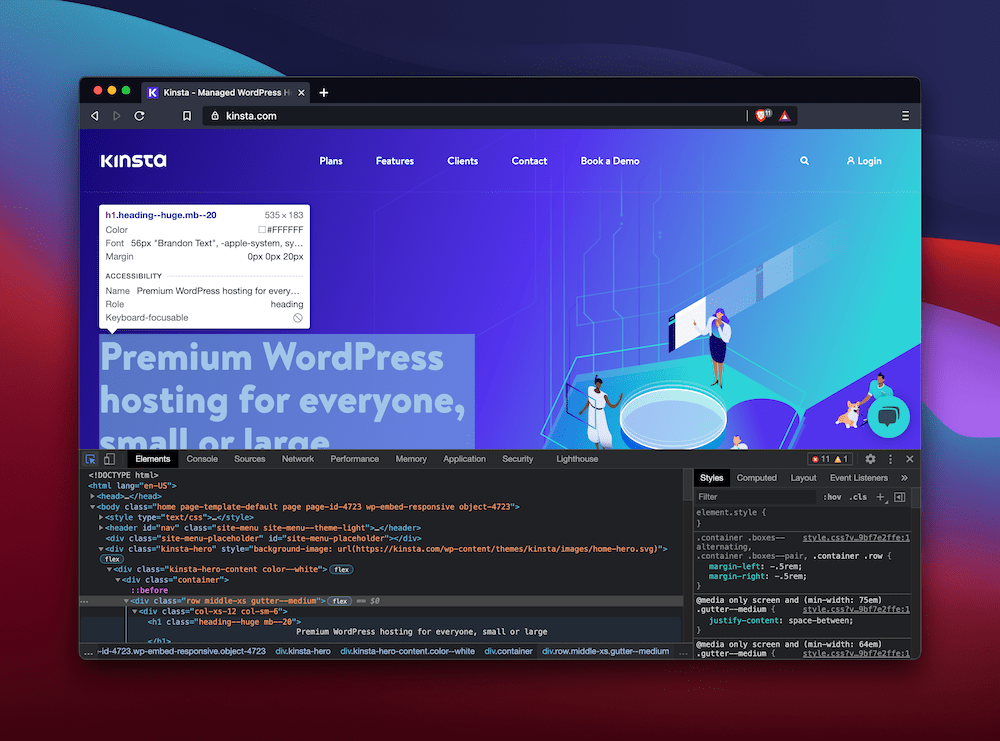
It's a elementary procedure — 1 of the reasons why the Audit Chemical element tool is so valuable and popular with web developers.
two. Emulating a Target Device, Display, and Browser
The Inspect Element also functions as a device emulator of sorts. In other words, you're able to encounter how a website looks on a specific device. The options are numerous:
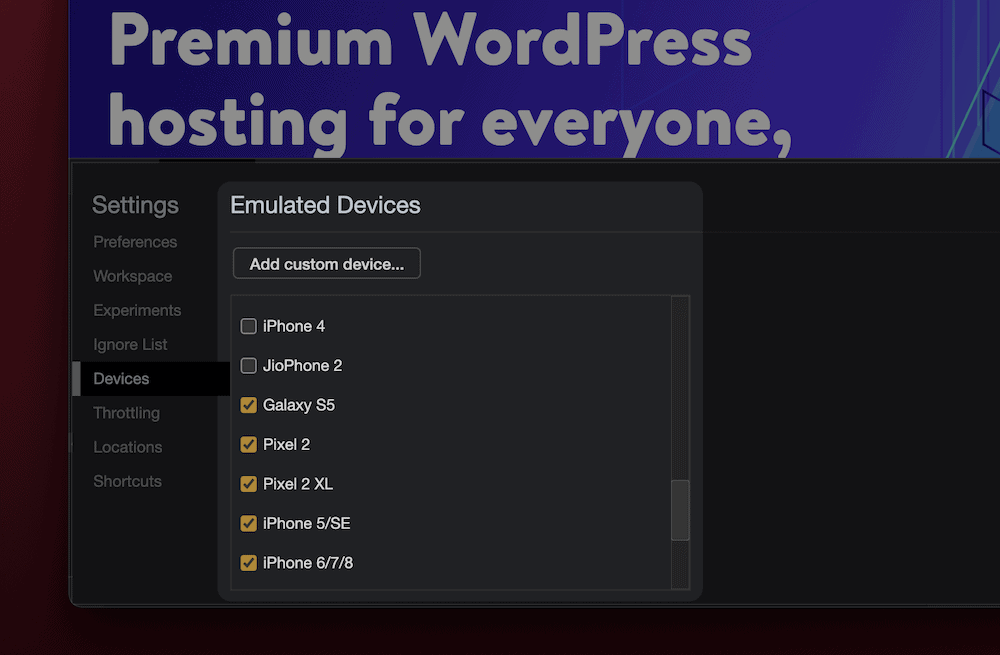
This emulator volition be great for judging whether your mobile-start strategy or responsive design is authentic and working. Information technology'southward invaluable and also more price-effective than having 200 devices floating around your desk-bound.
You'll oft access device emulation from a small icon somewhere on the Audit Element panel:
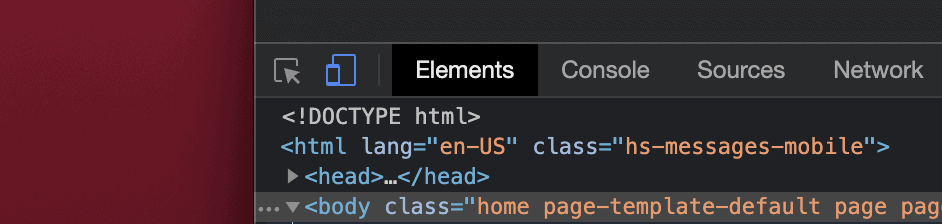
Clicking this icon will display your site equally information technology looks on the device you've selected:
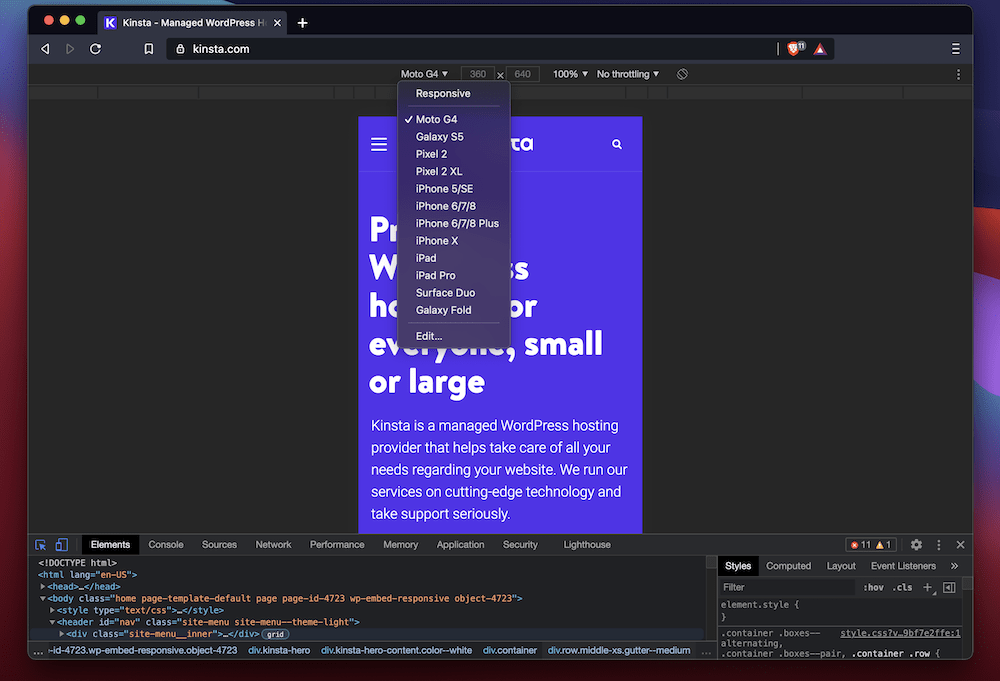
We'll dig into this in more than detail later, only information technology's a stone-solid fashion of making your designs consistent across devices.
3. Ascertaining the Performance of Webpage
The Inspect Element tool can also help you estimate the speed and performance of a website through the Operation panel:
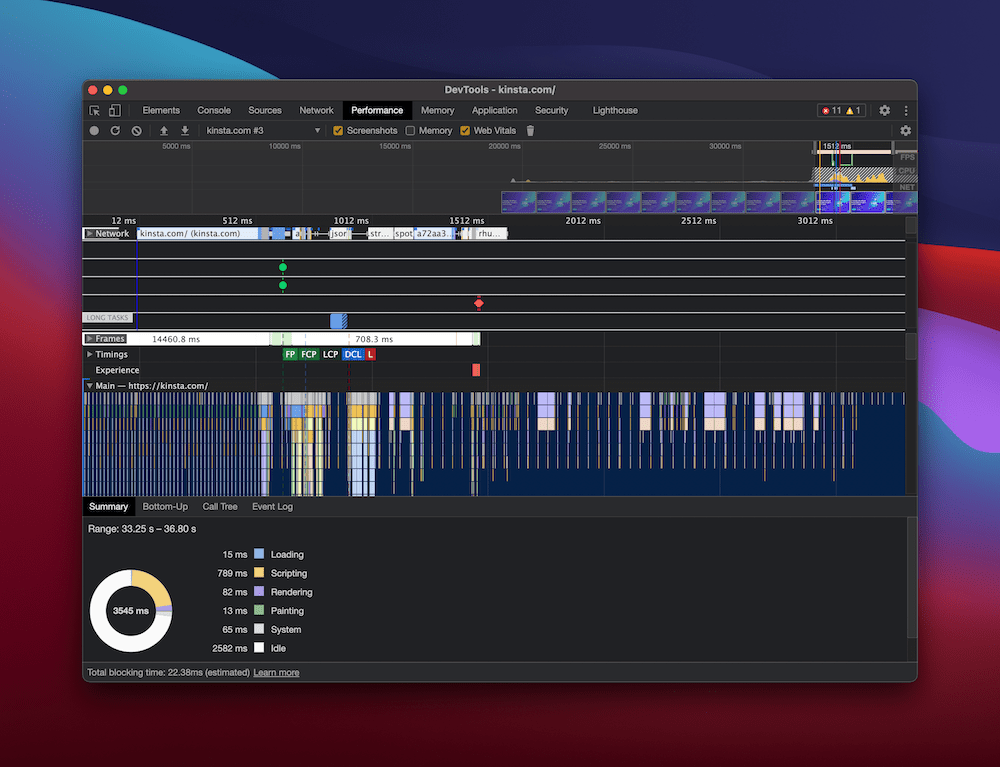
This feature works by "recording" the loading times of specific elements and scripts. Chromium-based browsers perform brilliantly at offering this information. You lot'll record the folio every bit it loads, so view the results in a timeline format.
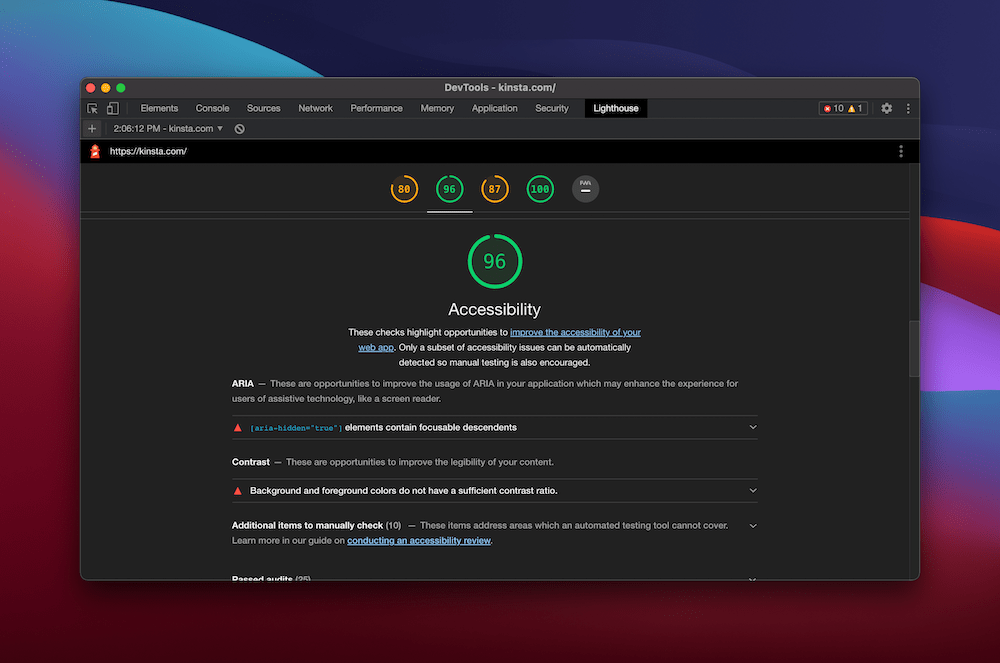
It's an excellent way to ascertain whether a folio is performant on a general level. From there, you'll want to use a tool such every bit Google PageSpeed Insights or Lighthouse to piece of work on your site's performance further. Chromium-based browsers volition have a Lighthouse study generator built-in:
You're as well able to meet a summary of the performance testing within a few other tabs. For example, you lot can view a Call Tree, an overall summary, and an Consequence Log:
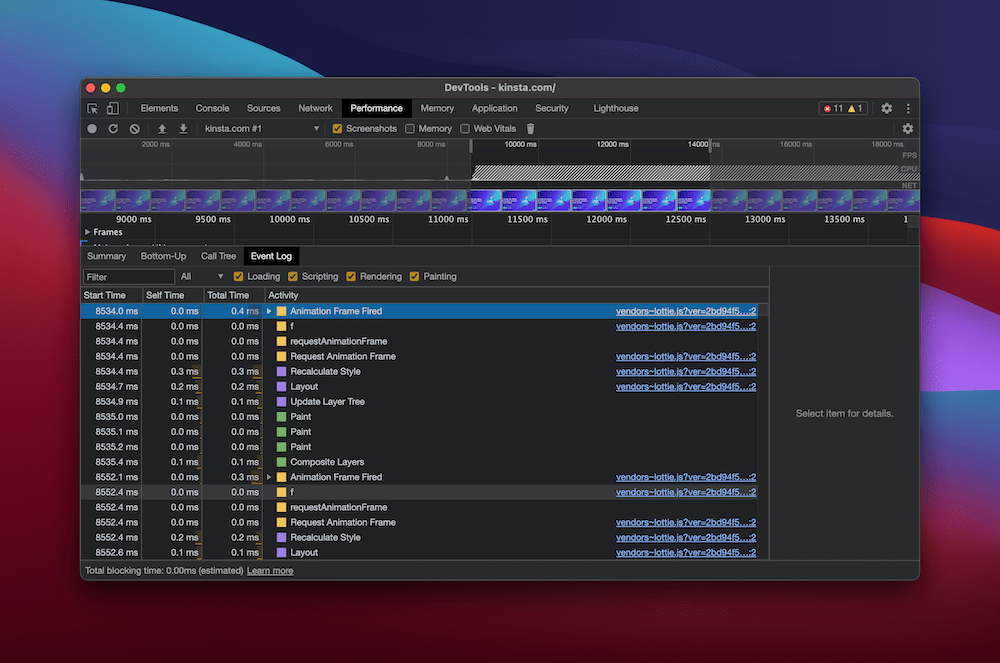
Information technology'southward conceivable that you wouldn't need whatsoever other tool to judge how your website performs or works. Learning how it works in practice is something nosotros'll discuss next.
Tricks and Tips for Using the Inspect Element Tool
We've already talked about how the Inspect Chemical element tool is more powerful than it may appear to be at showtime glance. Allow'southward take a look at some tricks and tips to become the all-time out of its feature fix, starting with the basics.
Subscribe At present
Changing Element Backdrop, Values, and States
And then far, we've but touched on the concept of using the Inspect Element tool to brand temporary changes to a site. Let's talk over how to do this in more than detail.
The steps are straightforward. Start, use the arrow icon to select your called element. You'll run into an overlay that highlights the various components as yous hover over them:
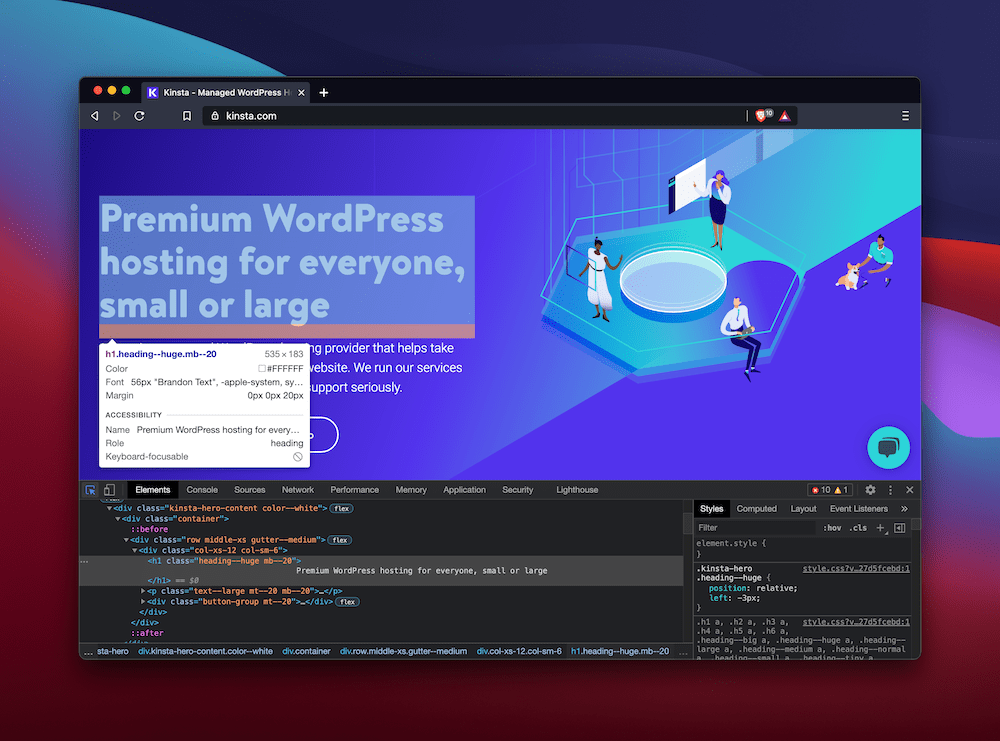
One time yous get to your desired chemical element, y'all tin can double-click almost anywhere you encounter a tag inside the Elements panel and type in a alter. For example, nosotros desire to change the original hero text on the Kinsta homepage to something unlike:

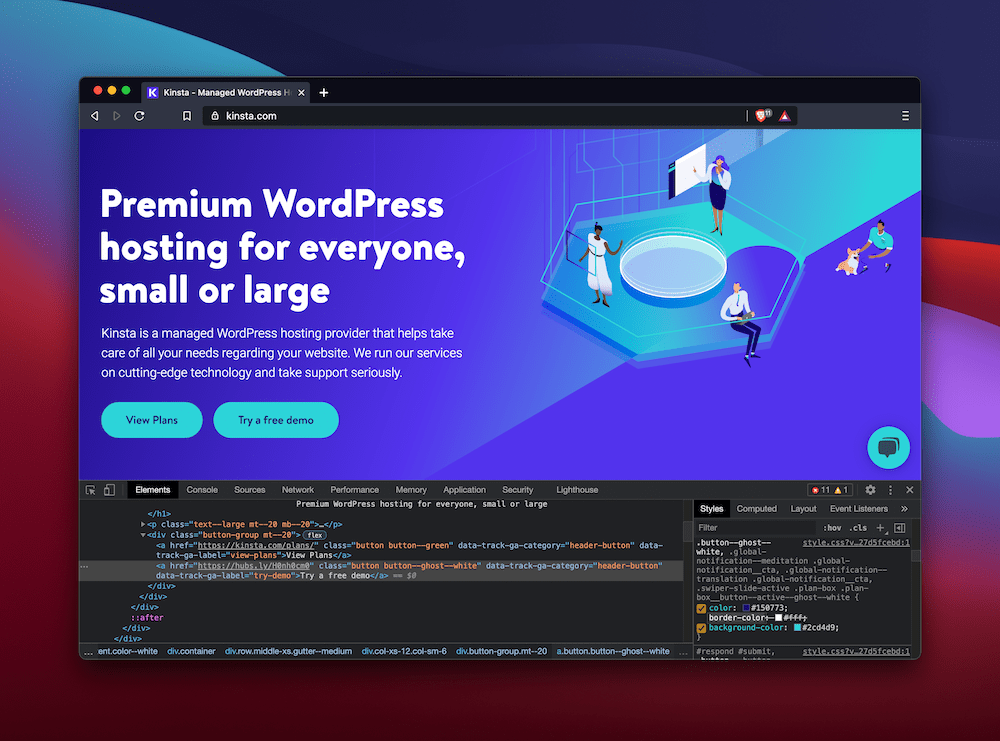
You lot can also work with CSS in the aforementioned style as HTML. For example, take the phone call to activeness (CTA) buttons on the Kinsta home folio:
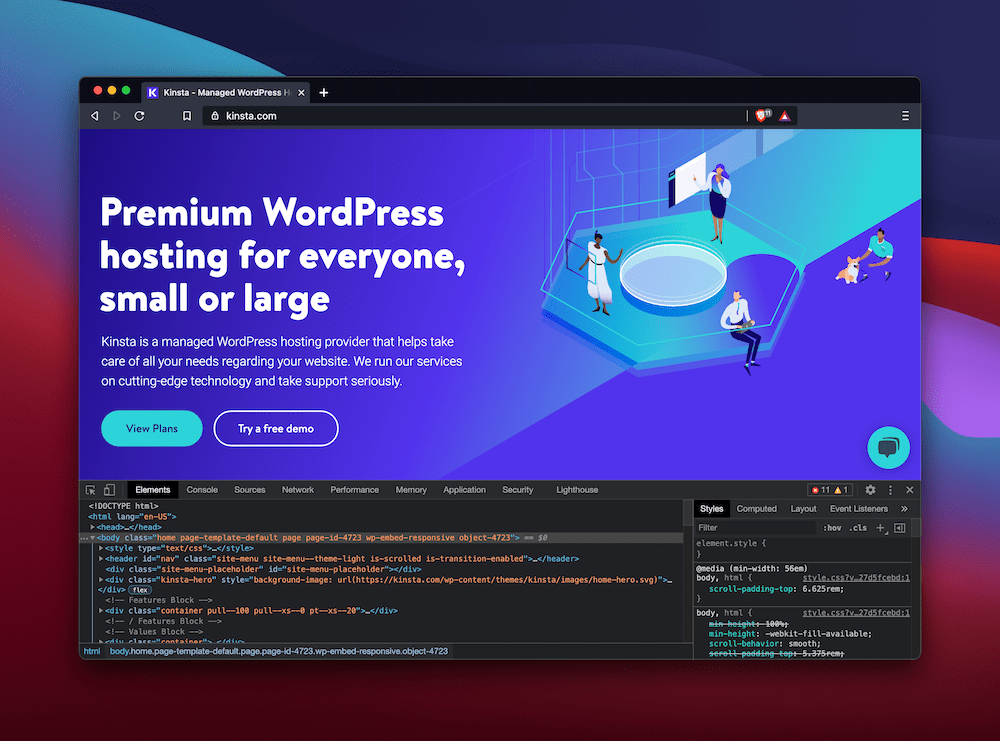
If you select the push using the pointer, y'all can meet its related CSS in the right-paw Styles panel:
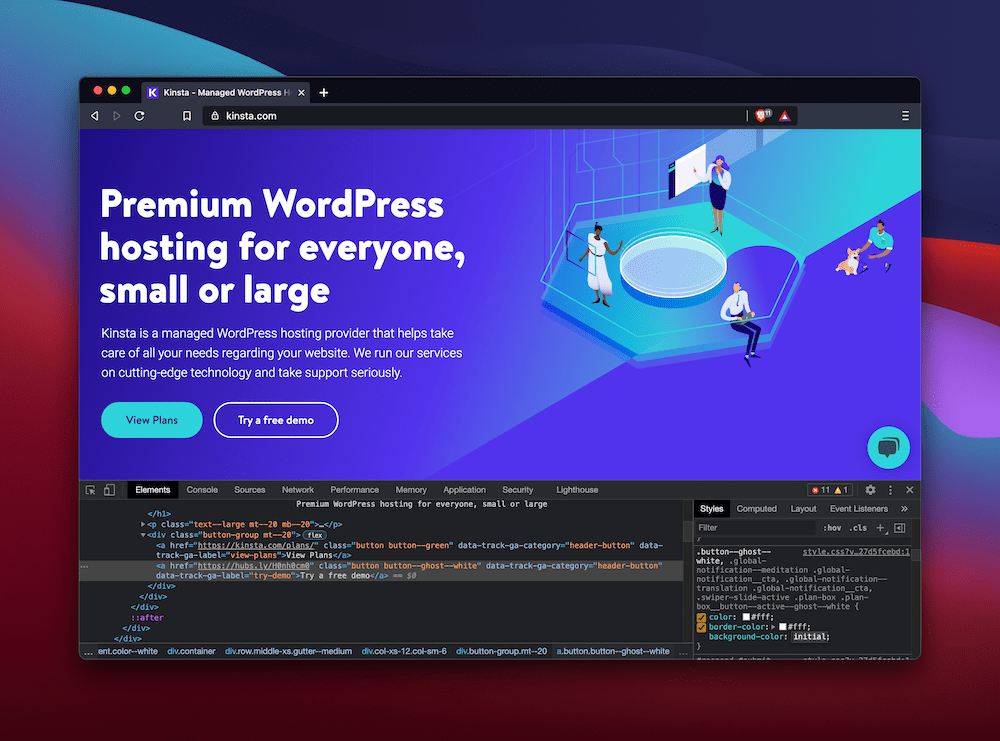
As with HTML elements, you tin change values and add your CSS in besides:
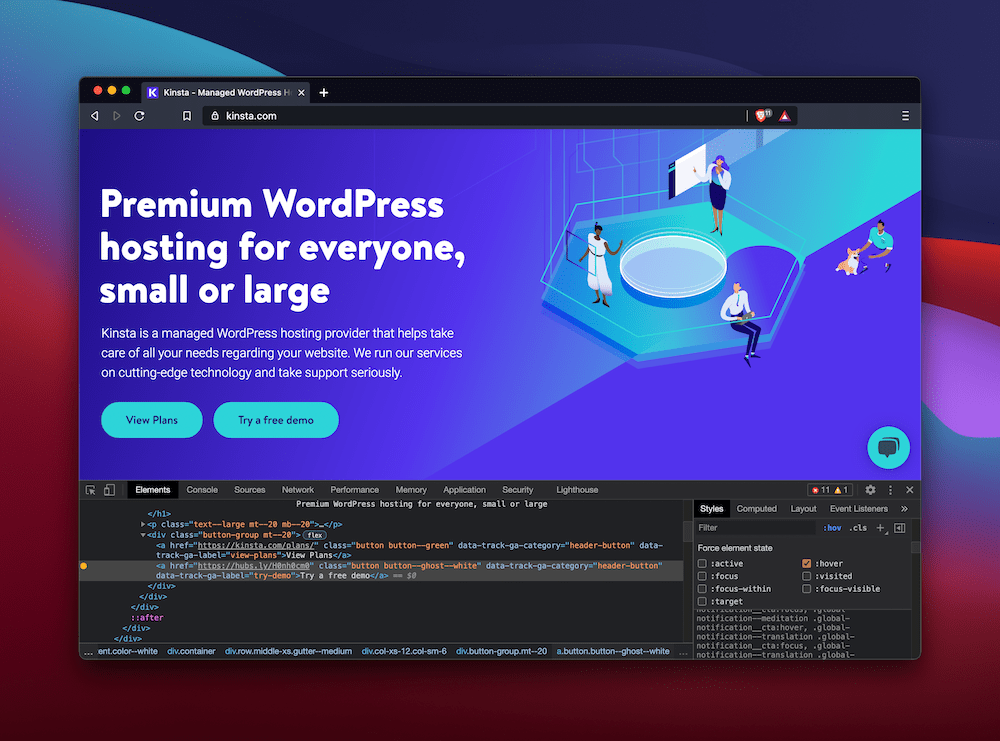
Of course, for elements such as buttons, yous may want to piece of work with its diverse states. In this case, the :hover state is worth changing besides. To practice this, click the :hov link in the Mode panel. Choosing this will bring up a list of element states, and you lot tin can select those yous want to see the hover-state CSS for:
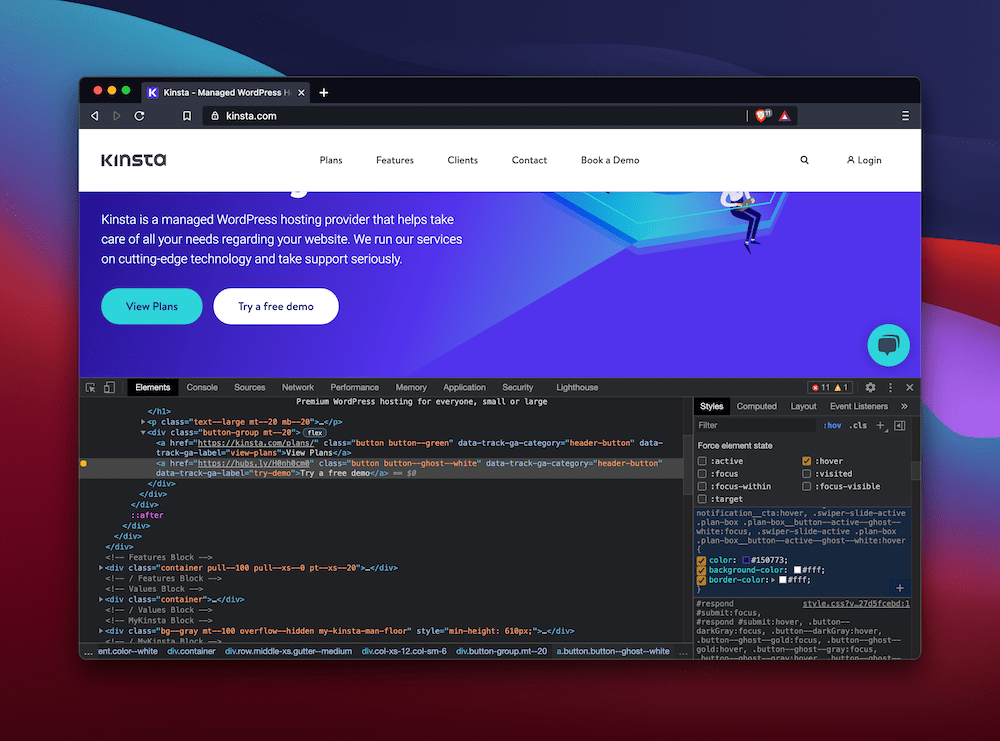
The webpage will show how the state looks without you having to act. Hither, nosotros've changed the hover colors to differentiate information technology from the default push state:
Y'all can even accept image URLs and swap them out for others. On the Kinsta home page, we testify a screenshot of the MyKinsta dashboard:
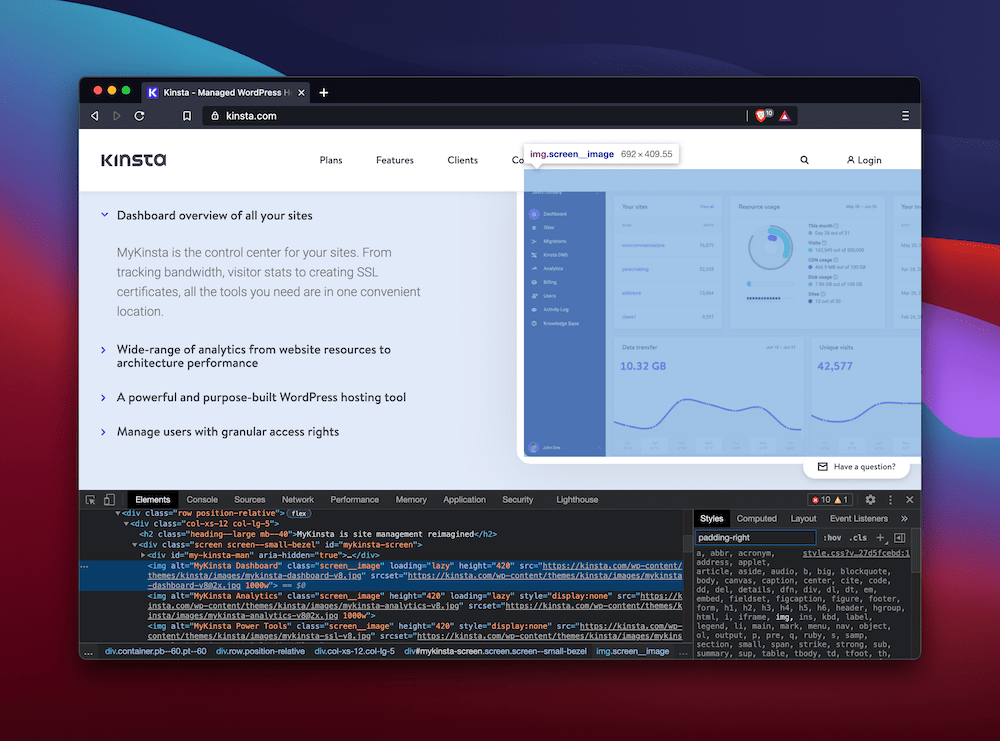
Through locating the element and irresolute the source URL of the prototype, you're able to exam out other pictures in its place:
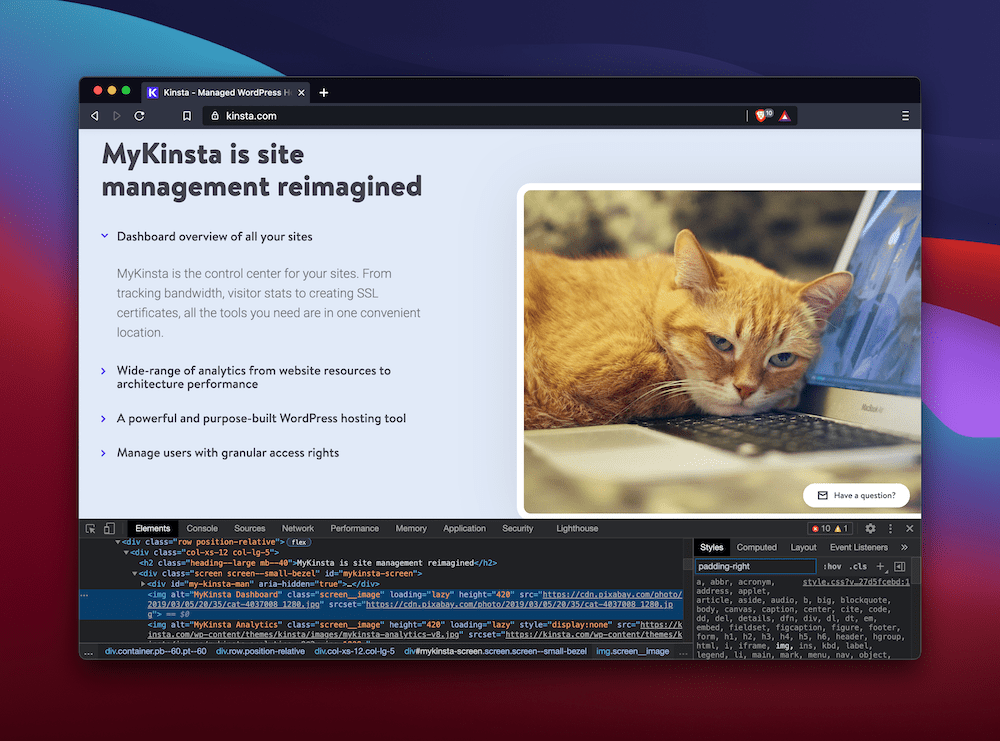
Equally y'all'd expect, these changes aren't permanent, and with a quick refresh of the folio, you lot can get things back to normal. As an alternative, you can too copy the HTML and CSS over to your editor and include them in your lawmaking to make those changes permanent.
Searching for Elements
Information technology could be that before you tin alter an element, you lot demand to find it. The Audit Element tool has straightforward search functionality that can help you find any aspect of a webpage.
That said, it's tough to find if yous don't know where to look. The "official" manner in Chromium-based browsers is to head to the "traffic calorie-free" menu on the right-hand side of the page and select the Search option:
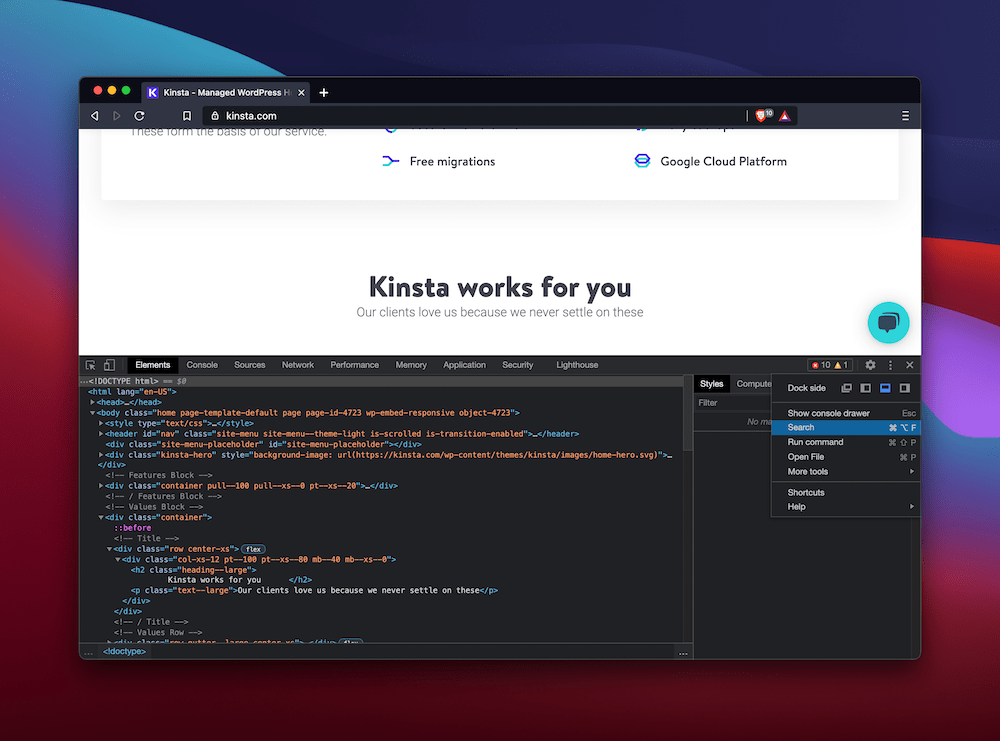
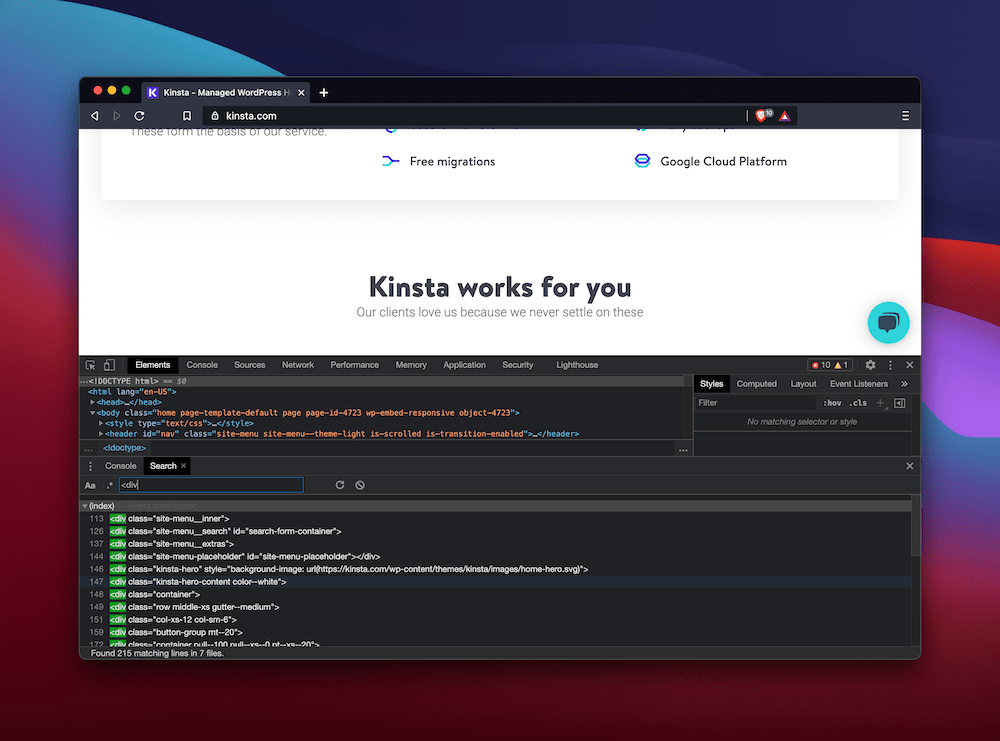
Using this will open up the Panel panel, forth with a Search tab. From here, type your desired tag into the text box, and you'll see a list of associated elements on the page:
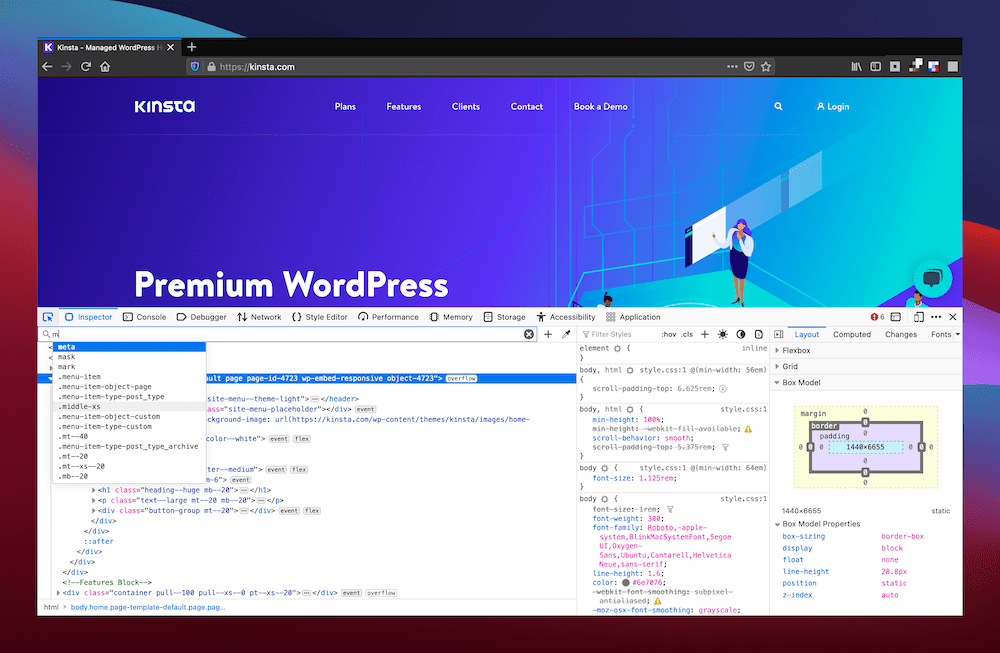
Annotation that in other browsers, you may observe the functionality elsewhere. For instance, Firefox includes a search box at the top of its Inspector console:
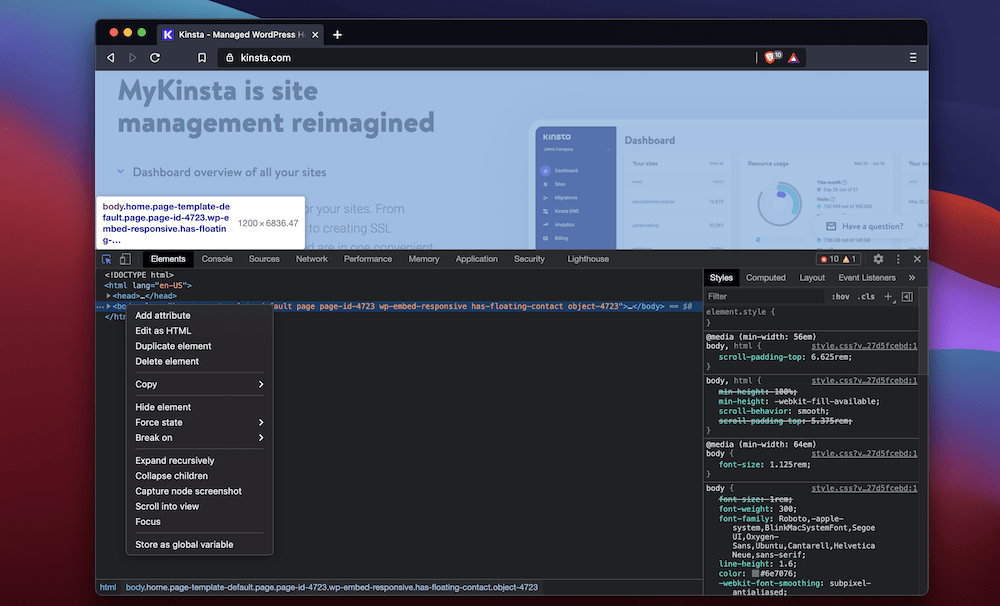
Here's another quick tip: Yous tin deport out recursive expansion of the various nodes and elements by right-clicking within the Elements pane, and choosing Aggrandize recursively:
If you accept a look at the Styles panel, y'all'll also spot a Filter text box. This field lets y'all filter by CSS properties, making information technology a great companion to the global search functionality:
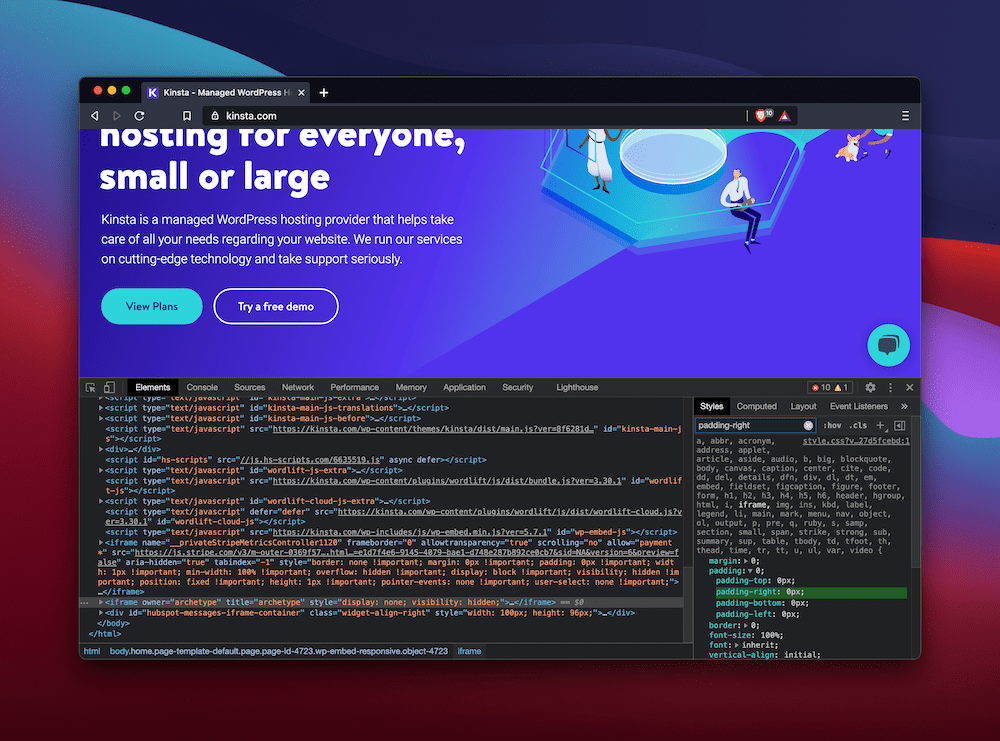
On the whole, information technology shouldn't be tough to find what y'all need with two dedicated filter and search tools.
A Quick Primer on the Box Model
One of the best ways the Inspect Element tool can help you larn more than about how CSS properties act upon elements is the visual "box model" panel.
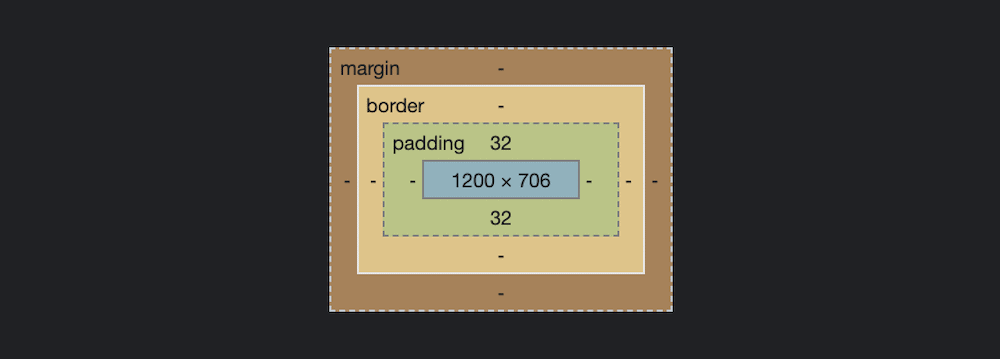
This overview gives you a representation of how a specific box (such as "element" or "div") appears on the screen. In other words, it's an overview of how the margins, padding, border, and content combine to get the section you see on-screen.
Explaining the complete CSS box model and how it interacts with a webpage's HTML is beyond the scope of this article, though Mozilla has a fantastic guide to the ins and outs of the concept.
Yous'll often detect the Box Model panel within the Layout or Computed sections of the right-hand pane of the Inspect Element tool:
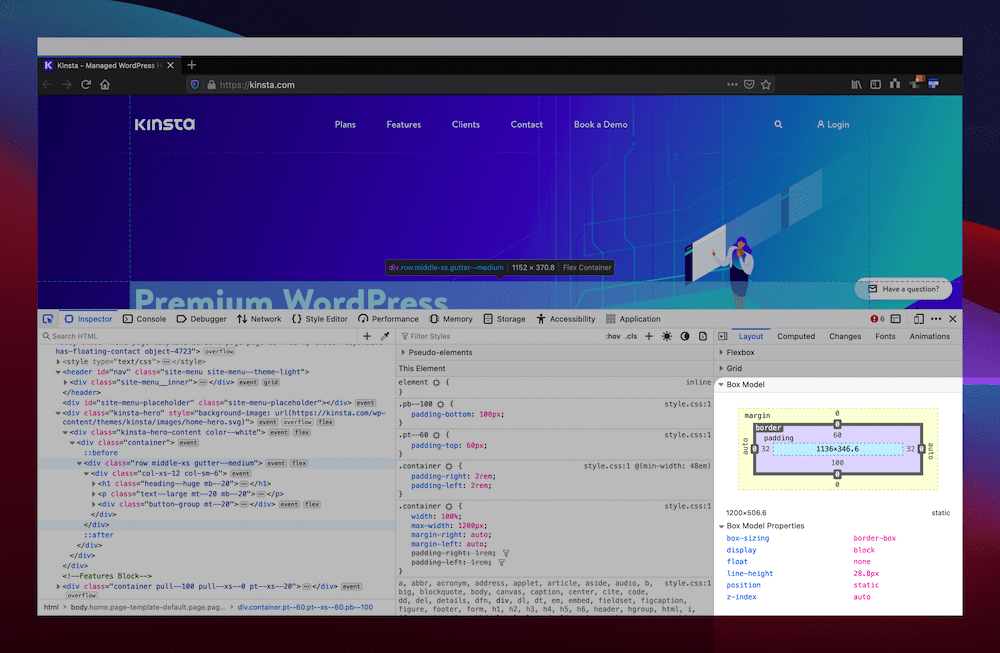
Every bit with whatever elements and backdrop, you tin can also change the values and settings of a detail box. At that place will also be a list of other backdrop to help y'all position the box, gear up a z-index, utilise float and display settings, and much more.
While working with the box model, you may also benefit from seeing the grid organization in play on the page. To do this, accept a look at the Layout panel — the options yous need will be nether the Grid menu:
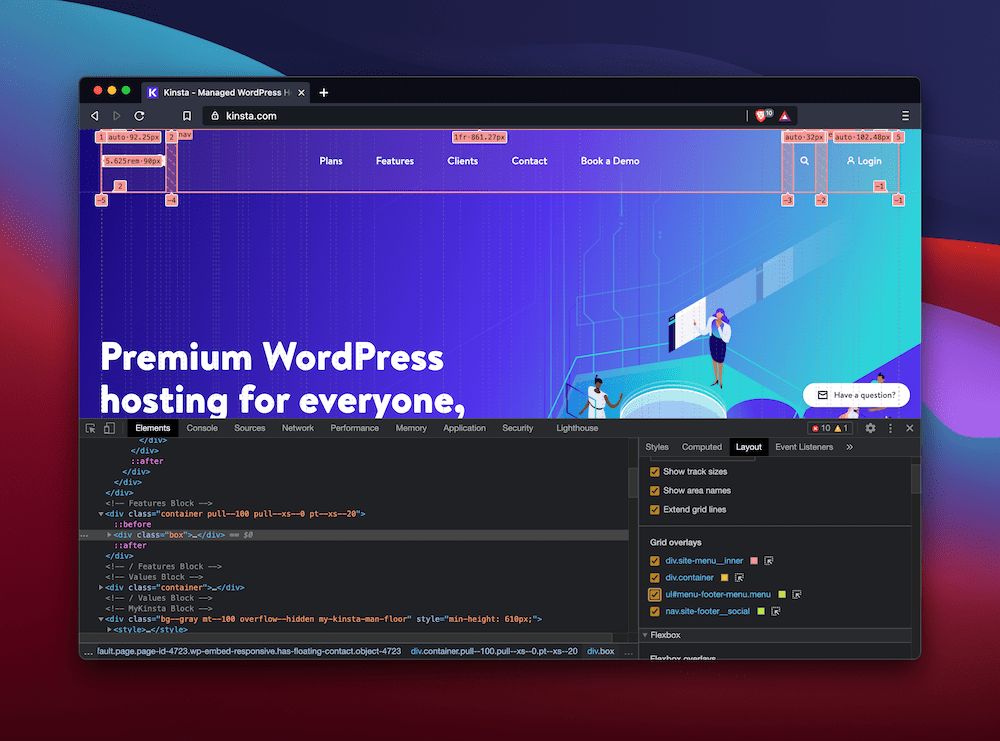
Clicking your desired display settings and and then choosing a relevant overlay volition show it on-screen, allowing you to make more accurate decisions using the box model to manipulate site elements.
Emulating Devices Using Inspect Element
They've turned from buzzwords into integrated lexical terms, but "responsive" and "mobile-friendly" are central web development factors. As such, the Audit Element tool tackles this facet through a couple of features.
In most browsers, the Inspect Element tool will take a mobile device icon along the elevation toolbar:
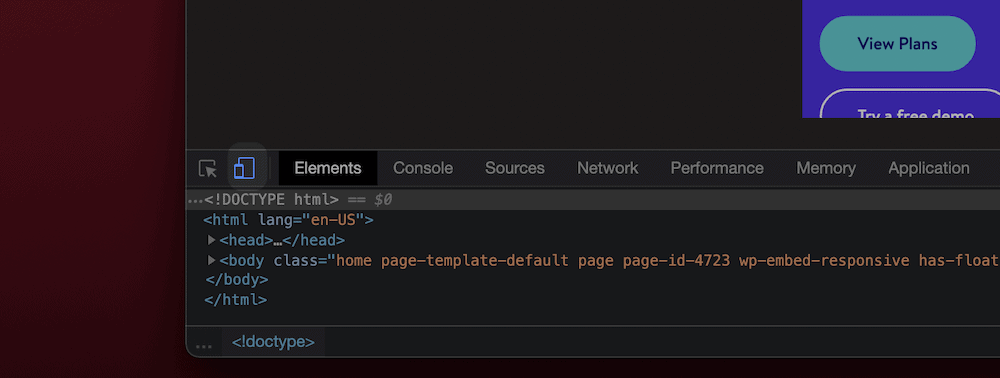
Safari, even so, is unlike. Instead, there'southward an Enter/Exit Responsive Pattern Way toggle in the Develop menu:
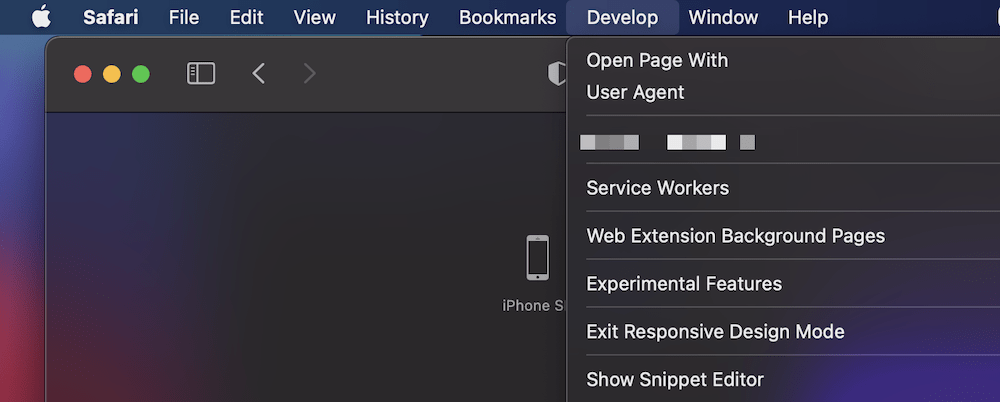
Regardless of how yous get there, in one case you cull the option, the webpage will display as though yous're viewing it in on a smaller device:
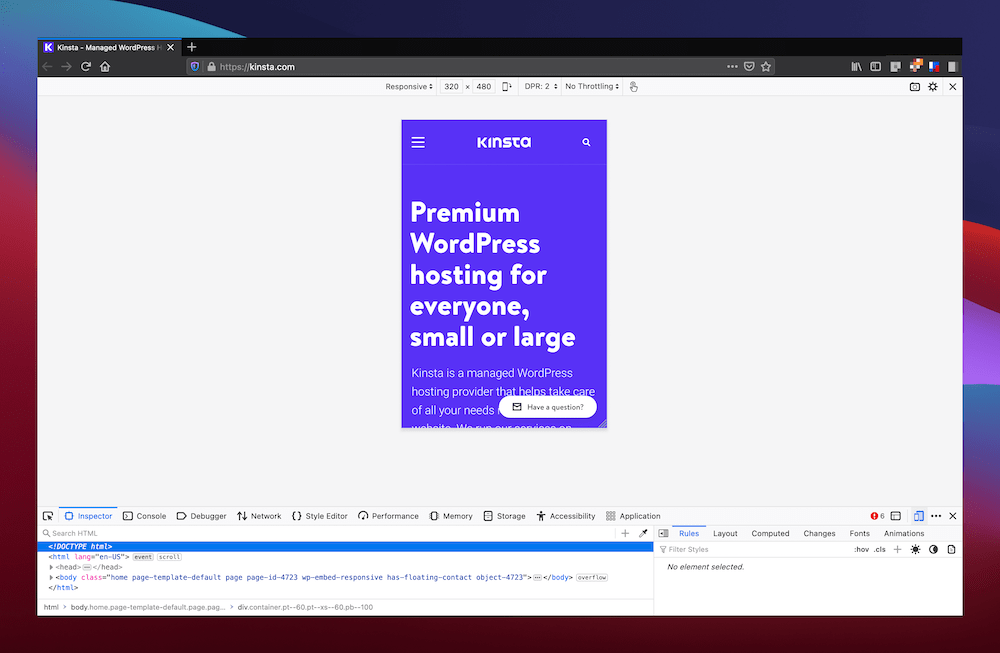
While Safari only gives you the choice of unlike Apple devices, other browsers dig in to provide you with the tools yous need to design with mobile-first principles. For example, y'all can cull the viewport's orientation, as well as which device you'd similar to emulate:
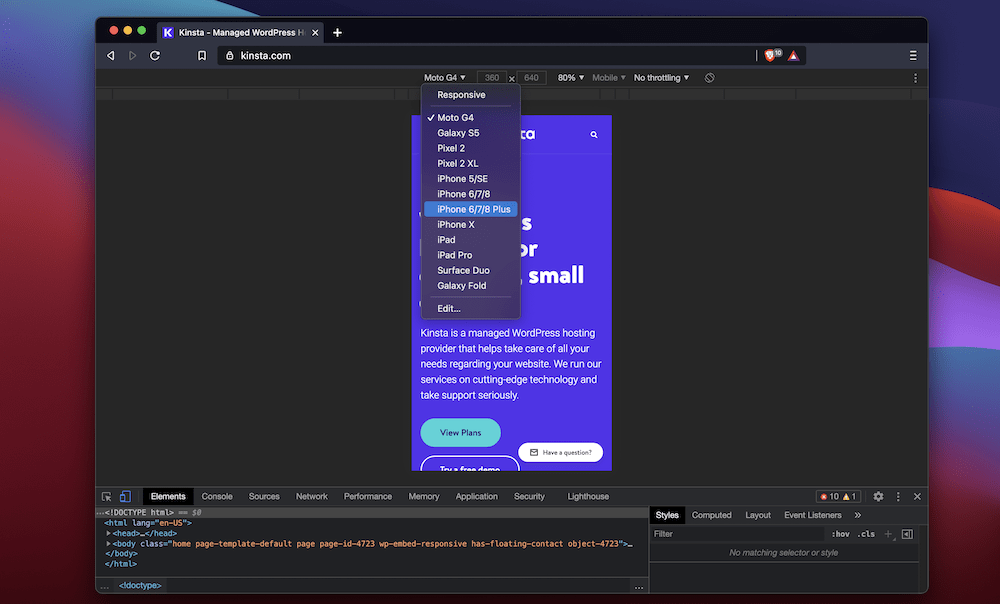
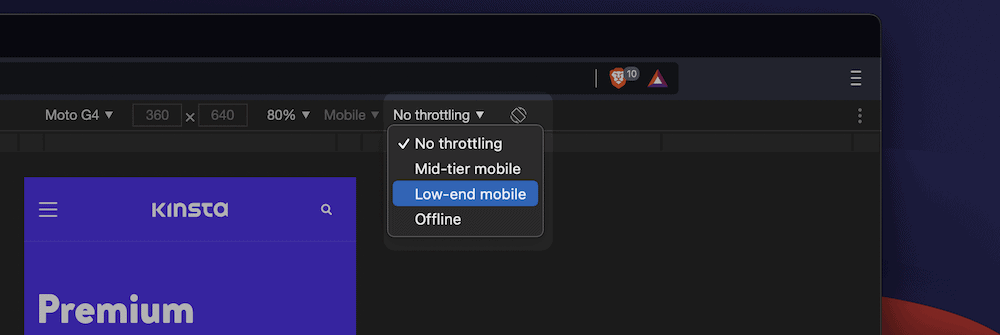
There are two other interesting features here. First, you lot can choose an emulated network speed. Safari doesn't include any options for this, and Chromium-based browsers offering a pocket-sized, general option of network throttling:
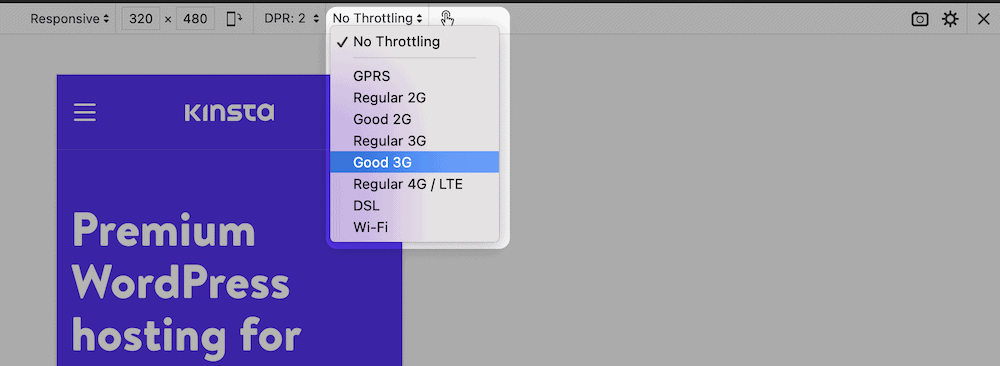
Firefox does the best here, with a decent selection of network choices to selection from:
To round things out, you're able to simulate haptic feedback and sensor recognition likewise. It'due south the default in Chromium-based browsers, and in Firefox, you lot accept to toggle it on:
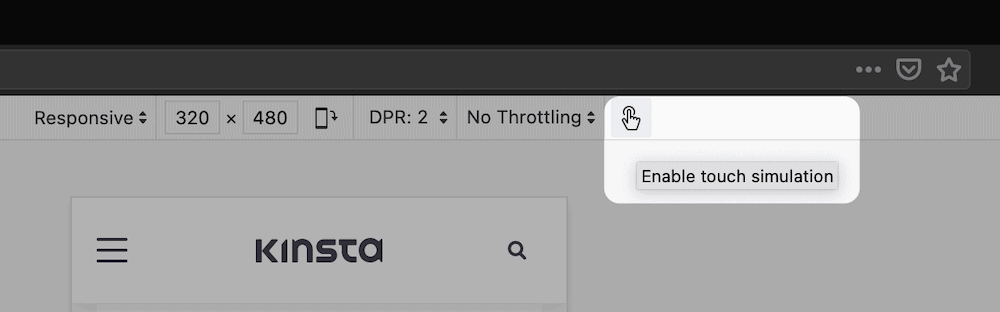
Firefox falls behind here, as Chrome, Dauntless, and others show your cursor as a small "fingertip-similar" overlay. The functionality isn't perfect for whatever browser, though it's a reliable way to determine how your site might human action on other devices.
This sort of testing oft falls by the wayside for many spider web developers. That said, at that place's no excuse now when browsers offer comprehensive solutions like this.
Keyboard Shortcuts When Using the Audit Chemical element Tool
Most browser keyboard shortcuts are oftentimes the same across browsers. That'due south expert news if you flit between various tools to test your sites.
Hither's a quick list of some of the most popular (and valuable) shortcuts:
| Open the Audit Chemical element tool | Control + Shift + C for Mac, Command + Shift + C for Windows |
| Move between nodes | Upwards and Down arrows |
| Expand the selected node | Right pointer |
| Collapse the selected node | Left arrow |
| Recursively aggrandize and plummet nodes | Option + Click for Mac, Alt + Click for Windows |
| Motility inside a node to work with attributes | Enter or Return |
| Step frontward through a node's attributes | Tab |
| Step backward through a node's attributes | Shift + Tab |
| Hide or bear witness the selected node | H |
| Edit and stop editing a node as HTML | F2 |
| When a CSS belongings is selected, increment the value by 1 | Up arrow |
| When a CSS property is selected, decrement the value past i | Down arrow |
| When a CSS property is selected, increase the value by ten | Shift + Up arrow |
| When a CSS property is selected, decrement the value by ten | Shift + Down arrow |
| When a CSS property is selected, increase the value past 0.1 | Option + Upwardly pointer for Mac, Alt + Upwardly arrow for Windows |
| When a CSS holding is selected, decrement the value by 0.1 | Pick + Down arrow for Mac, Alt + Down pointer for Windows |
Of course, in that location are many more shortcuts available. Mozilla has infrequent documentation for Firefox, while Chrome, Brave, Border, and others share shortcuts. Apple tree is less helpful with Safari programmer shortcuts, as there is no defined list within their aid pages. Instead, we suggest reading through the official documentation for Safari's developer tools.
Summary
Web evolution is no longer just HTML. There are many technologies involved. Even sticking with the holy trinity of HTML, CSS, and JavaScript, you'll still demand to see how a website pulls all of these components together.
The browser's Inspect Element tool is one of the best ways to look nether the hood of a website and find out in explicit particular how it works. While information technology's fantastic equally a learning aid, it can besides help you examination changes to your site and observe how it functions on dissimilar devices and mobile networks.
Do you use the Inspect Element frequently? If so, what are your favorite features? Share your opinions in the comments section!
Save time, costs and maximize site performance with:
- Instant help from WordPress hosting experts, 24/vii.
- Cloudflare Enterprise integration.
- Global audience accomplish with 34 data centers worldwide.
- Optimization with our built-in Application Performance Monitoring.
All of that and much more, in one plan with no long-term contracts, assisted migrations, and a thirty-day-money-back-guarantee. Check out our plans or talk to sales to find the plan that'due south right for you.
Source: https://kinsta.com/blog/inspect-element/
Posted by: garciafonly1976.blogspot.com
0 Response to "How To Inspect Element In Windows Application"
Post a Comment